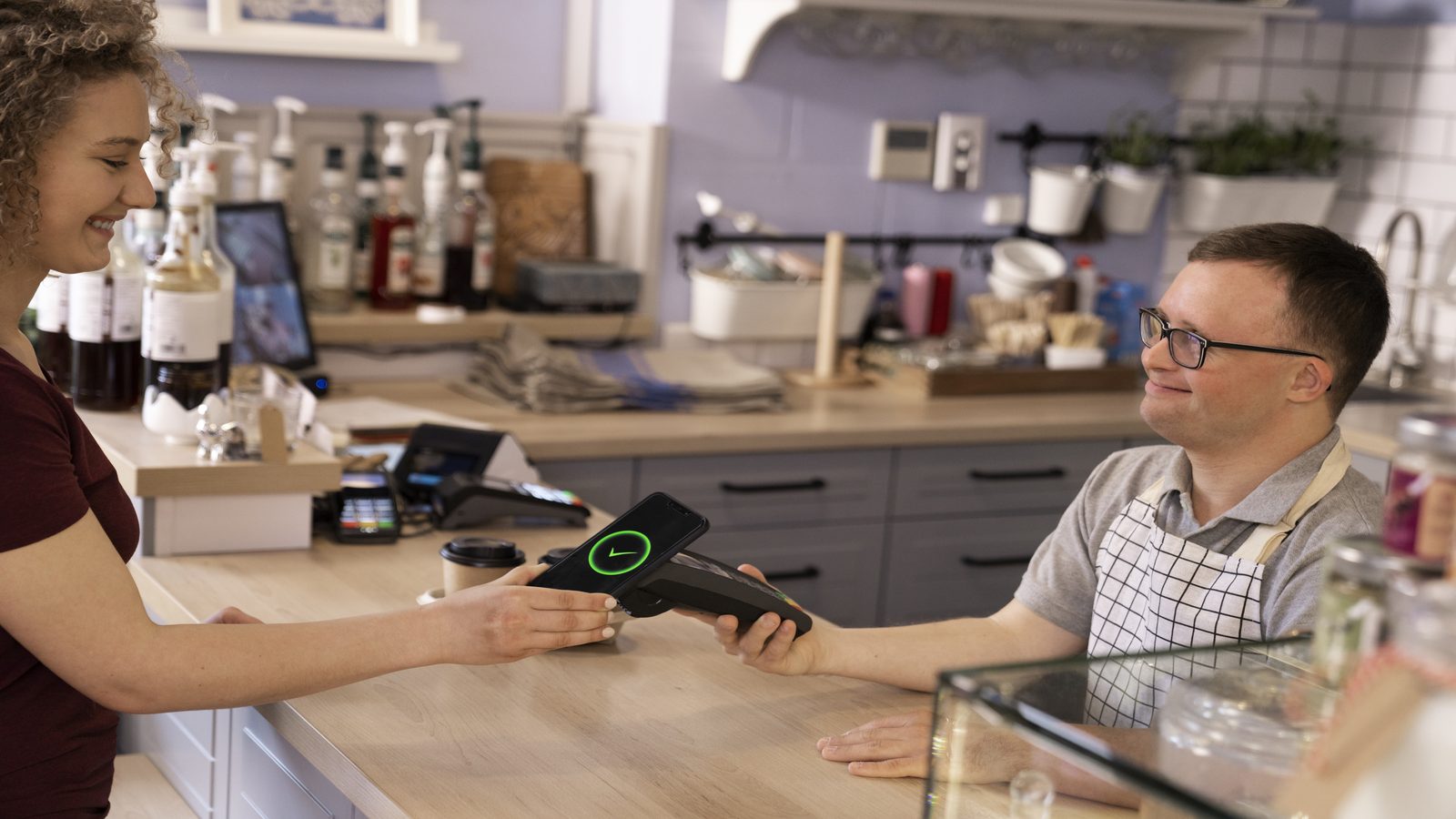
When Square announced that Lightning payment acceptance would be enabled by default for all US merchants in early 2026, the Bitcoin community treated it as a validation moment. And it is, to a point. One of the world’s largest payment processors deciding that Lightning is ready for mainstream merchant use is significant.
But the story behind the story matters more for small merchants, particularly those operating in African and emerging market contexts where Square does not directly serve. What Square got right, what it had to build to get there, and what it still cannot solve are all instructive for anyone doing merchant onboarding in communities far from Square’s target market.
What Square Actually Did
Square, operating under its parent company Block, had been supporting Bitcoin purchases through its Cash App for years. The 2026 move was different: it integrated Lightning payment acceptance into the merchant-facing Square Point of Sale system, alongside card payments and other methods.
The key details:
Default-on. New Square merchants get Lightning acceptance without opting in. Existing merchants have it activated with the option to disable. This is significant because it means Lightning is no longer a niche feature for crypto-enthusiast merchants. It is a standard payment rail.
Automatic conversion. By default, Lightning payments received by merchants are immediately converted to USD. Merchants see a dollar amount in their settlement, not a Bitcoin balance. This removes the volatility concern that has been the primary merchant objection to Bitcoin acceptance.
Same settlement timeline. Lightning payments settle to the merchant’s bank account on the same schedule as card payments. The merchant does not need to manage a Bitcoin wallet or handle conversion themselves.
No additional fee for Lightning. Square processes Lightning payments at the same merchant fee rate as card transactions. For the merchant, there is no economic reason to prefer or avoid Lightning specifically.
What This Gets Right
Square’s approach addresses the three most common objections merchants raise when we discuss Bitcoin acceptance in community settings:
“I don’t understand Bitcoin.” Square’s integration does not require merchants to understand Bitcoin. They see a payment, it settles in dollars, and the process is identical to processing a card tap. The complexity is entirely behind the scenes.
“I don’t want to deal with price volatility.” Automatic conversion to dollars eliminates volatility exposure. The merchant receives the exact dollar amount shown at the time of the transaction.
“I don’t want to add another system.” Lightning is integrated into the same terminal and dashboard that merchants already use. No separate wallet, no separate app, no separate reconciliation.
These are exactly the barriers we encounter in merchant onboarding work. Square’s approach is a proof of concept that these barriers are solvable at scale.
What Small Merchants in Emerging Markets Should Learn
Square’s implementation is a US-focused product from a large fintech company. Most of the merchants we work with do not have access to Square. But the principles behind Square’s approach are transferable:
The Merchant Does Not Need to Be a Bitcoin Enthusiast
This is the most important lesson. In community education and merchant onboarding, there is a persistent temptation to lead with Bitcoin philosophy: decentralisation, sound money, freedom from central banks. Square’s approach demonstrates that merchants do not need to believe in Bitcoin’s ideology to accept Bitcoin payments. They need a system that works, settles reliably, and does not create additional risk.
When we onboard merchants in community settings, the conversations that work best are the ones that focus on practical business outcomes, not Bitcoin education. The merchant readiness checklist is designed around this principle.
Automatic Conversion Is Key for Most Merchants
Most small merchants operate with thin margins and cannot afford volatility exposure. The ability to accept a Lightning payment and immediately receive local currency equivalent is essential for mainstream adoption. In markets where Square operates, it handles this automatically. In markets where it does not, similar functionality needs to be built through local exchanges, peer-to-peer markets, or community arrangements.
This is one of the hardest problems in emerging market Bitcoin adoption: building reliable, low-cost conversion infrastructure.
Integration Beats Novelty
Square succeeded not by making Lightning a special feature but by making it unremarkable. It is just another way to pay, processed through the same system. For merchant onboarding in community settings, the same principle applies: Bitcoin acceptance should feel like an extension of the merchant’s existing payment setup, not a parallel system.
Default-On Matters
The decision to enable Lightning by default rather than requiring opt-in is a powerful distribution choice. In community contexts, this translates to making Bitcoin acceptance the default part of a broader payment education program rather than a separate, opt-in module.
Where Square’s Model Does Not Translate
It would be dishonest to present Square’s approach as a template that works everywhere. There are specific aspects that do not translate to emerging market contexts:
Regulatory environment. Square operates in a regulated US market with clear legal frameworks. Many merchants in African and emerging markets operate in regulatory environments where cryptocurrency acceptance is uncertain or evolving.
Banking infrastructure. Square settles payments to bank accounts. Many of the merchants we work with do not have bank accounts. Mobile money settlement is necessary, and that adds a conversion layer that Square’s merchants do not face.
Technical infrastructure. Square provides the hardware, the software, the payment processing, and the banking integration. In community-based merchant onboarding, each of these layers needs to be assembled from different providers, and the integration is less seamless.
Scale economics. Square’s Lightning processing costs are low because they are amortised across millions of merchants. A community-based Lightning merchant program does not have those economics.
Practical Takeaways for Community Educators
If you are running merchant education sessions or onboarding programs, here is how to use Square’s announcement:
As a normalisation tool. “One of the world’s largest payment companies now supports Lightning by default” is a powerful credential in conversations with sceptical merchants. It moves Lightning from experimental to established in the merchant’s perception.
As a design reference. Study how Square presents Lightning to merchants. The language is practical, not technical. The focus is on settlement, not on blockchain mechanics. Your merchant conversations should follow similar patterns.
As an honest benchmark. Square’s integration is polished because it is backed by a company with thousands of engineers and billions in resources. Do not promise the same experience from a community-built setup. Be honest about where your local infrastructure is less polished.
As evidence of a trend. Square’s move signals that Lightning merchant acceptance will become standard in developed markets. For merchants in emerging markets, early adoption of Lightning acceptance positions them ahead of this trend.
For practical guidance on merchant Lightning setup, see our guide on Bitcoin for small merchants.
What Comes Next
Square’s default-on approach to Lightning will likely influence other major payment processors. If Lightning acceptance becomes standard across US and European merchant ecosystems, it creates a global network of Lightning-accepting businesses that any Lightning wallet holder can pay at.
For merchants in emerging markets, this means that accepting Lightning connects them to a growing global payment network, not just a local niche. For community educators, it means the story of Lightning merchant acceptance shifts from “experimental” to “inevitable.” The question becomes not whether to prepare merchants for Lightning, but how to do it well.
Common Questions
Can merchants outside the US use Square’s Lightning feature? Not directly. Square’s Lightning integration is currently US-focused. Merchants in other markets need alternative tools for Lightning acceptance.
Do Square merchants keep Bitcoin or get dollars? By default, Lightning payments are converted to USD automatically. Merchants receive dollars, not Bitcoin.
How does this affect Lightning adoption in Africa? Indirectly but significantly. Square’s adoption normalises Lightning as a merchant payment rail. This makes it easier to make the case for Lightning acceptance in other markets.
What fees does Square charge for Lightning payments? Square processes Lightning payments at the same fee as card transactions. The merchant does not pay additional fees for the Lightning payment rail specifically.
Should community educators reference Square in their workshops? Yes, as a credibility and normalisation tool. But be honest about the gap between Square’s polished integration and the tools available in your local market.
Conclusion
Square enabling Lightning by default is a milestone for Bitcoin payment infrastructure. For small merchants in emerging markets, the direct impact is limited because Square does not serve most of these markets. But the indirect lessons, about integration, default activation, automatic conversion, and merchant-first design, are directly applicable to community-based merchant onboarding everywhere.
The opportunity is to learn from what a well-resourced company did right and adapt those principles to local contexts with honesty about the limitations.